Cutting Through The Noise Of Financial Markets



Why Diversification Matters
Diversification is the practice of spreading investments across global markets and different types of securities. Thanks to modern platforms and low-cost access to a wide range of asset classes, investors today can diversify far more easily than in the past.
At its core, diversification reduces non-systematic risk (also known as specific risk). If you put all your eggs in one basket, you might outperform the market but you also risk losing everything. Even well-researched bets can be derailed by unforeseen events. For example, you might be bullish on Japan for the next three years, but an earthquake or volcanic eruption could devastate the economy, wiping out your thesis despite sound analysis.
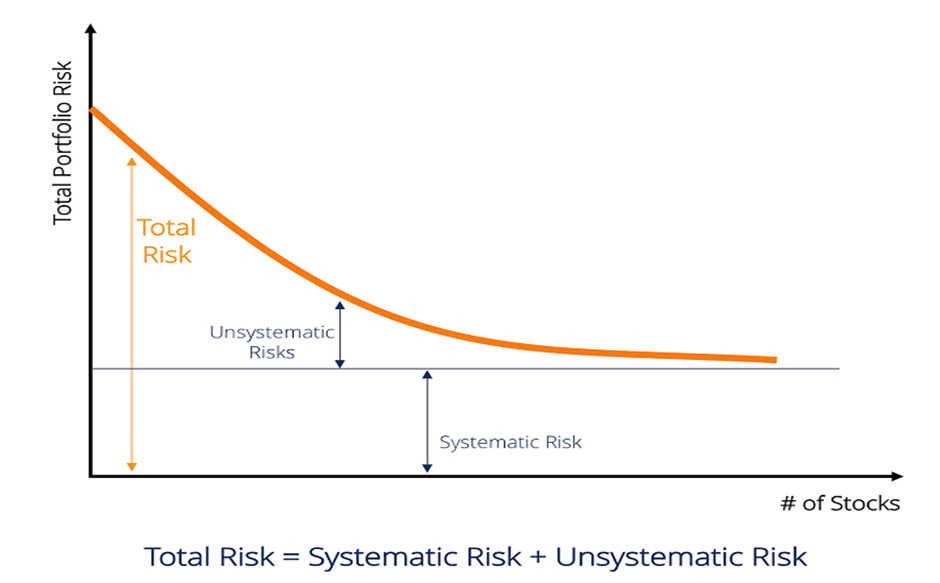
Figure 1. Shows how we can lower total risk by lowering unsystematic risk through an increase in total stocks
The Risk Curve
There’s a clear negative relationship between the number of stocks in a portfolio and unsystematic risk. As you add more holdings, specific risk becomes less significant. However, simply piling on stocks isn’t enough. If all 30 of your holdings are in the same industry or country, they’ll likely move together when shocks occur. True diversification requires spreading investments across different industries and geographies, so that if one company or sector faces unexpected challenges, the rest of your portfolio remains resilient.
The Case Against Diversification
Warren Buffett has famously argued that “diversification is protection against ignorance,” suggesting that investors who truly know what they’re doing don’t need to spread themselves too thin. Yet even hedge fund managers supposedly the best of the best struggle to consistently beat the market. In fact, only 40–55% of hedge funds outperform the market in any given year, highlighting that skill alone isn’t enough; luck plays a role too. For everyday investors who don’t have hours each week to dedicate to deep research, diversification is not just helpful it’s essential.
Systematic Risk
Once unsystematic risk is diversified away, what remains is systematic risk the risk that affects all markets globally. Events like COVID-19 or the Global Financial Crisis are unavoidable, and no amount of diversification can shield you from them. However, history shows that markets recover over time. Long-term investors who can withstand these shocks are rewarded with the equity premium, the higher returns equities deliver compared to fixed income and other safer assets.
ETFs: The Easy Path to Diversification
Exchange-Traded Funds (ETFs) have made diversification simpler than ever. With a single ETF, you can gain exposure to thousands of companies across entire markets at low fees. Developed market ETFs tend to be cheaper, while more exotic markets carry higher costs. Either way, ETFs allow investors to build diversified portfolios without the complexity of buying hundreds of individual stocks.
Summary
While there are valid arguments against diversification, for casual investors it remains one of the most important strategies to manage risk. Even professionals can’t reliably beat the market, so a passive, diversified approach may sometimes outperform them. That’s a powerful reminder: by spreading risk intelligently, you can achieve strong long-term outcomes without needing to predict every twist and turn in global markets.
Disclaimer: The content provided on Whisper Wealth is for informational and educational purposes only and does not constitute financial, investment, or legal advice. While I strive to provide accurate and timely information, I am not a licensed financial advisor, and the views expressed are my own. You should not rely solely on this content to make financial decisions. Always consult with a qualified financial professional before making investment choices. Whisper Wealth and its contributors are not responsible for any losses or damages resulting from reliance on this information.


